Why Your Toddler Won’t Poop on the Potty: 5 Reasons and How to Fix It
Your toddler can pee in the potty, but poop is an impossible mission?
They know what the toilet is for. They might even run to the bathroom independently, pull down their pants, and proudly show you what a big kid they are becoming. But when it’s time to #2, your toddler won’t poop.
But when it comes to pooping?
Suddenly, they’re hiding behind the couch, asking for a diaper, holding their poop for days, or leaving a little surprise in their underwear while insisting they don’t need to go.
Sound familiar?
If you’re dealing with a toddler who refuses to poop on the potty, I want you to take a deep breath. I know how frustrating this can be, especially when you feel like you’ve finally figured out potty training and then poop throws a giant wrench into the whole process.
As a potty training consultant with over 10 years of experience helping families navigate these struggles, and as a mom who has been through potty training with my own children, I can tell you something important.
Your child is not necessarily being stubborn, difficult, or deliberately making your life harder. There’s usually a reason they’re struggling, and understanding that reason is the first step toward solving the problem.
Let’s talk about why toddlers refuse to poop on the potty, the signs of poop withholding, and what you can do to help your child move forward without turning your bathroom into a battleground.
Watch: Why Your Toddler Won’t Poop on the Potty
Sometimes, hearing someone explain what’s happening can help everything click into place. In this video, I walk you through the most common reasons toddlers struggle with pooping on the potty, the signs of withholding, and what NOT to do when your child refuses to poop in the toilet.
Why Is Pooping on the Potty So Much Harder Than Peeing?
One of the biggest frustrations I hear from parents is, “My child has peeing figured out. Why can’t they just poop in the toilet, too?”
I get it! You’ve spent time teaching your child how to recognize the urge to pee, get to the bathroom, and use the potty. They’re making progress, and you feel like you’re finally getting somewhere.
Then poop comes along, and it feels like you’re starting all over again.
Here’s the thing: peeing and pooping in the potty are two different skills.
Your child might have plenty of opportunities to practice peeing throughout the day. They might pee every couple of hours, giving them multiple chances to recognize their body’s signals and practice using the toilet.
Pooping is different. Depending on your child’s bowel habits, they might only have one opportunity a day, or even less frequently.
They’re also learning to recognize different physical sensations, coordinate their bodies in a different way, and feel comfortable releasing their poop in a new location.
Think about it from your toddler’s perspective. They’ve spent their entire life pooping in a diaper, probably while standing, squatting, hiding in a corner, or playing with their toys. Now you’re asking them to sit on a toilet and do something that feels completely different.
That’s a big adjustment for a little person!
Sometimes, your child simply needs more time and practice. Other times, there’s a deeper reason behind their resistance that needs to be addressed before they’ll feel comfortable pooping in the potty.
Let’s look at the five most common reasons.
1. Your Toddler Is Afraid to Poop on the Potty
Fear is one of the biggest reasons children struggle with pooping in the toilet.
And here’s something important to understand: fear doesn’t always look like fear.
Your toddler might not tell you they’re scared. They might not even have the words to explain what they’re feeling.
Instead, their fear might look like hiding behind the couch when they need to poop. It might look like asking for a diaper, refusing to sit on the toilet, or suddenly deciding they don’t need to poop when you suggest going to the bathroom.
Some children are afraid of sitting on the toilet itself. It might feel too big, too high, or unstable. They might worry about falling in, or they might not like the feeling of their bottom being unsupported.
Other children are afraid of the poop coming out.
Yes, really!
To adults, pooping is just a normal bodily function. But to a toddler, the sensation of releasing poop into a toilet instead of a diaper can feel strange and unfamiliar.
They might be worried about the sound, the splash, seeing the poop fall, or simply feeling something leave their body.
If your child is afraid, adding more pressure isn’t going to make them feel safer.
Instead, focus on helping them build comfort and confidence. Make sure their potty setup feels secure, their feet have support, and they have opportunities to become comfortable in the bathroom without feeling like every trip needs to result in poop.
The goal isn’t to convince your child that they have nothing to fear. It’s to help them feel safe enough to work through whatever is making them uncomfortable.
2. Your Toddler Has Experienced Painful Poops
This is a big one, and it’s especially important because it can turn into a frustrating cycle.
Maybe your toddler had a hard poop that hurt. Maybe they experienced constipation, developed a small tear around their anus, or simply had an uncomfortable bowel movement that scared them.
Whatever the original cause, they remember that it hurt.
Now, when they feel the urge to poop again, they might try to avoid it because they’re afraid the same thing will happen.
Here’s where the cycle can begin:
- Your child has a painful bowel movement.
- They become afraid of pooping again.
- They start holding their poop to avoid the discomfort.
- The longer they hold it, the more water their body absorbs from the stool, potentially making it harder and more difficult to pass.
- The next bowel movement hurts, reinforcing their fear.
And around and around it goes.
This is one reason poop withholding can become such a persistent problem. Your child isn’t necessarily refusing to poop because they want control over the situation. They may be trying to protect themselves from something that genuinely hurt them.
If pooping hurts, your child needs help addressing the discomfort, not pressure to push through it.
If you suspect constipation or painful bowel movements, contact your child’s pediatrician. Repeated withholding can worsen constipation, and some children need medical treatment to get comfortable again.
Once pain is addressed, you can work on rebuilding positive associations with pooping and helping your child feel safe using the toilet.
Remember, a child who is afraid of pain isn’t going to feel better simply because you tell them they’re a big kid or offer a special reward.
We need to address the reason behind the fear.
3. Your Toddler Is a Habitual Diaper Pooper
Some children aren’t particularly afraid of the toilet. They’re simply used to pooping in a diaper.
And honestly? That makes sense!
Your child has spent years developing a routine around using their diaper. They know what it feels like, they know where to go, and they know how their body feels when they’re about to poop.
They might prefer to stand in a particular corner of the living room, squat behind the couch, or disappear into their bedroom for a little privacy.
It’s familiar, predictable, and it’s what they’ve always done.
Then potty training begins, and suddenly you’re asking them to change a habit they’ve practiced over and over again.
Imagine if someone told you that you had to change your entire bathroom routine tomorrow. You’d probably have some questions, too!
For some children, the biggest challenge is learning how to release their poop while sitting on the toilet. They might only know how to poop while standing up in a diaper, which means they’re learning a new body position and a new routine at the same time.
Other children have become so accustomed to pooping in their diapers that they don’t see a reason to change. From their perspective, the diaper works just fine!
The solution isn’t necessarily to give them unlimited opportunities to keep pooping in a diaper, nor is it to force them onto the toilet until they finally go.
Instead, we need to understand the habit, help them feel comfortable with the transition, and create a plan that moves them toward pooping in the toilet without increasing their anxiety.
Different children need different approaches. A child who is comfortable pooping but attached to their diaper may need a different strategy from a child who is terrified of releasing poop into the toilet.
That’s why understanding the WHY matters so much.
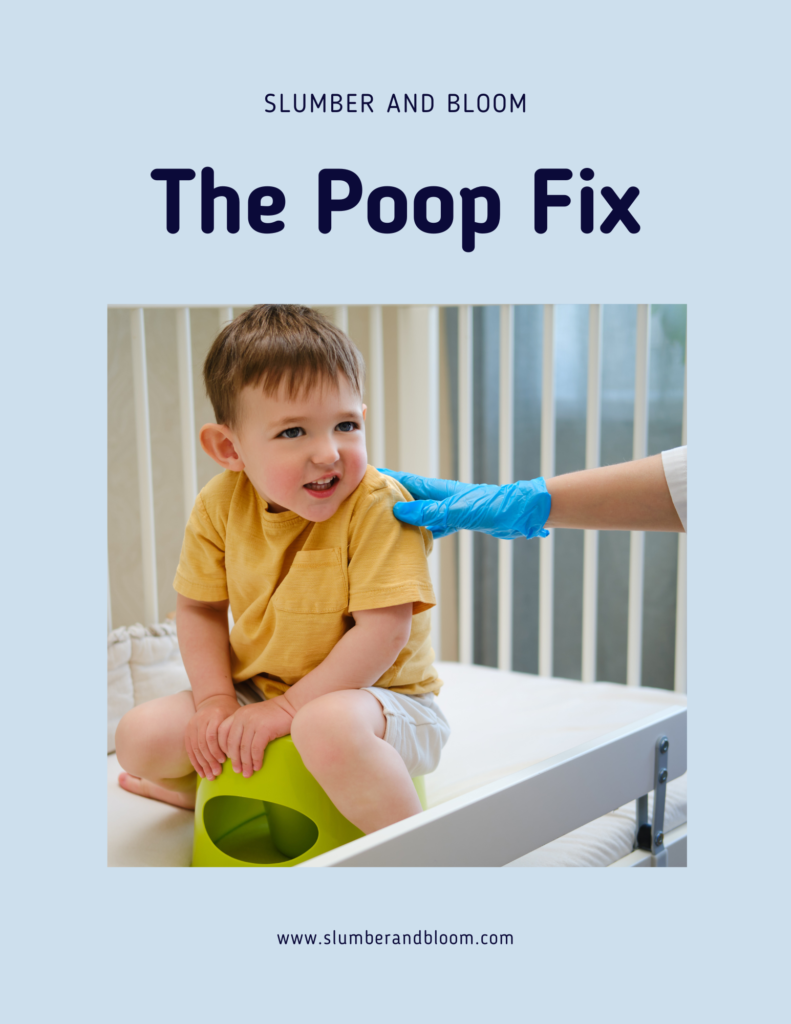
The Poop Fix
Who This Is For
This guide is perfect for parents who are dealing with:
- 💩 Poop withholding
- 💩 “I’ll pee, but I won’t poop!”
- 💩 “It hurts!” fears
- 💩 Only pooping in diapers or pull-ups
- 💩 Constipation cycles
- 💩 Toilet refusal
If you’re exhausted, frustrated, or feeling stuck — this guide brings the clarity and confidence you’ve been missing.
The Results You Can Expect
🌟 Less stress
🌟 Fewer tears
🌟 More regular poops
🌟 Confident toileting
🌟 A happier, more relaxed toddler
🌟 You feeling like: “Okay… I’ve got this.”
What Parents Are Saying
✨ “Finally understand my kid’s poop issues.”
✨ “We went from refusal to success in 3 days.”
✨ “This guide gave me my sanity back!”
4. Your Toddler Isn’t Quite Ready Yet
Sometimes, a child is struggling because they’re not developmentally ready for the expectations being placed on them.
Potty training readiness isn’t just about being a certain age, showing interest in underwear, or being able to pee in the potty.
It also involves recognizing bodily sensations, communicating the need to go, and developing enough physical awareness and control to participate in the process.
Some children develop these skills earlier than others.
And yes, sometimes families are working against a deadline. Preschool might require children to be potty trained. Daycare might have rules about diapers or underwear. You might be preparing for a major transition and hoping to have potty training completed before it happens.
I understand that those situations can create a lot of pressure for parents.
But even when a deadline is approaching, we still need to consider what our child is capable of doing and where they’re struggling.
If your child doesn’t yet recognize the urge to poop, cannot comfortably release their stool, or doesn’t have the developmental skills needed for the expectations you’re setting, pushing harder may not solve the problem.
Instead, look at what your child can already do, what skills they’re still developing, and where you can offer support.
Sometimes, that means adjusting your expectations. Sometimes, it means changing your approach. And sometimes, it means getting professional guidance to help you determine the best next step.
The goal is progress, not perfection.
5. Your Toddler Is Withholding Their Poop
Now let’s talk about poop withholding, because this is something I want every parent navigating potty training to understand.
Poop withholding happens when a child intentionally or involuntarily avoids passing stool, often because they’re afraid of pain, uncomfortable with the toilet, or trying to avoid an unfamiliar sensation.
It can happen during potty training, especially when a child feels pressure to poop in the toilet before they’re comfortable doing so.
But withholding isn’t always obvious.
You might think your child simply doesn’t need to poop. Or, you might think they’re too busy playing. You might even believe they’re being stubborn because they insist they don’t have to go, even when you can see them doing the potty dance.
Here are some common signs to watch for.
Signs of poop withholding in toddlers
Your child might:
- Hide behind furniture or in another room when they need to poop.
- Walk on their tiptoes, stiffen their body, or appear to be holding themselves in.
- Cross their legs, squeeze their bottom, or clench their buttocks.
- Lie down, squat, or move into unusual positions to avoid releasing stool.
- Do the potty dance but insist they don’t need to poop.
- Ask for a diaper specifically when they feel the urge to have a bowel movement.
- Go several days without passing a normal bowel movement.
- Pass small, hard stools or experience painful bowel movements.
- Have stool smears or skid marks in their underwear, which can sometimes indicate constipation and stool leakage.
Not every child will show all these signs, and some withholding behaviors can look surprisingly similar to the behaviors children use when they’re trying to poop.
The key is to look at the overall pattern.
If your toddler consistently avoids pooping, appears to be holding it in, or becomes distressed when the urge to poop arrives, it’s worth taking a closer look.
How long is too long without pooping?
During potty training, bowel habits can change. A child who previously pooped regularly might start going less frequently as they adjust to the new routine.
However, going more than a couple of days without a bowel movement, particularly when withholding behaviors are present, deserves attention.
There isn’t one universal number of days that determines whether a child is constipated. Stool consistency, pain, your child’s normal pattern, and other symptoms matter, too.
Small amounts of stool leaking into underwear can sometimes be a sign of constipation with overflow, rather than a child simply having an accident.
If your child is repeatedly withholding, has painful or hard stools, or is experiencing stool leakage, contact your pediatrician rather than waiting for the problem to resolve on its own.
The longer constipation and fear reinforce each other, the harder the cycle can become to break.
What NOT to Do When Your Toddler Refuses to Poop on the Potty
Now that we understand some of the reasons behind poop struggles, let’s talk about what to avoid.
Because when your child is refusing to poop, it’s easy to feel like you need to DO SOMETHING.
You might find yourself asking every 20 minutes whether they need to use the potty. You might start setting timers, offering bigger rewards, or insisting they sit on the toilet until something happens.
I get it. You’re trying to help!
But when fear, anxiety, or withholding is part of the problem, some of these well-intentioned strategies can make things worse.
Don’t force your child to sit on the toilet
If your child is already afraid of pooping, forcing them to sit on the toilet can increase their anxiety.
The bathroom can quickly become a place associated with pressure, frustration, and conflict rather than a place where they feel safe.
Instead, work on identifying what makes the toilet uncomfortable and help your child build confidence at a pace they can manage.
Don’t shame or punish poop accidents
Your child doesn’t need to feel embarrassed about having an accident.
Avoid scolding, threatening consequences, comparing them to other children, or making them feel like they’re disappointing you.
If they’re withholding because they’re afraid, shame adds another layer of stress to an already difficult situation.
Keep your response calm and matter-of-fact. You can maintain expectations without making your child feel bad about their body.
Don’t ask every 20 minutes if they need to poop
Constant reminders can create a cycle where your child feels watched and pressured every time they need to use the bathroom.
They may become more focused on avoiding your questions than learning to recognize their own bodily signals.
Instead, create predictable, low-pressure opportunities to use the toilet, such as after meals, when the body’s natural gastrocolic reflex can make a bowel movement more likely.
Offer the opportunity without turning it into a demand. If your child is struggling with withholding or constipation, work with your pediatrician to determine an appropriate plan.
Don’t automatically give up and return to the old routine without a plan
On the other hand, if your child asks for a diaper every time they need to poop, simply agreeing to continue the same pattern indefinitely may not help them learn to poop in the toilet.
But that doesn’t mean you should abruptly take away every familiar comfort and force them to figure it out.
There’s a middle ground between forcing your child and doing nothing.
The best approach depends on WHY your child is struggling. A child who is afraid of the toilet needs something different from a child who is experiencing painful constipation or one who has developed a strong diaper habit.
The answer isn’t to push harder. It’s to choose a strategy that addresses the actual problem.
How to Help Your Toddler Poop on the Potty
So, what should you do instead?
Start by taking a step back and looking at the whole picture.
Rather than asking, “How do I get my child to poop in the toilet?” start by asking, “What’s making it difficult for my child to poop in the toilet?”
That one shift can change how you approach the entire situation.
Step 1: Identify the reason behind the struggle
Think about your child’s behavior.
Are they afraid of sitting on the toilet? Do they ask for a diaper because they’re used to pooping that way? Have they experienced painful bowel movements? Do they appear to withhold their poop for long periods?
Consider what happens before, during, and after they try to poop.
You may start to notice patterns that help you understand what’s going on.
If pain, constipation, or stool leakage is part of the picture, involve your pediatrician before focusing on behavioral strategies alone.
Step 2: Make sure the toilet feels comfortable
Your child’s physical setup matters more than you might think.
If they’re sitting on a full-size toilet, make sure they have a secure child-sized seat or insert that helps them feel stable.
Their feet should rest firmly on a stool rather than dangling in the air. Supporting the feet and allowing the knees to sit slightly higher than the hips can make it easier to relax the pelvic floor and pass stool.
If your child prefers a small potty on the floor, consider whether that setup feels more comfortable for them.
You don’t need to make the bathroom fancy. You just need to make it feel safe, accessible, and comfortable.
Step 3: Reduce pressure and build positive associations
Your child should not feel like every bathroom visit is a test they have to pass.
Look for ways to make the bathroom a calm, predictable place.
Read a book together. Let your child explore their potty without expectations. Offer praise for cooperation and effort rather than making success the only thing worth celebrating.
If your child is frightened, take small steps toward comfort instead of expecting them to jump straight into sitting on the toilet and pooping.
And remember, sitting on the potty isn’t the only measure of progress. A child who is beginning to feel more comfortable talking about poop or entering the bathroom without fear may be making meaningful progress, too.
Step 4: Support healthy bowel habits
Comfortable bowel movements are an important part of successful potty training.
Offer regular meals, age-appropriate fluids, and a variety of fiber-containing foods as part of your child’s usual diet.
A relaxed opportunity to sit on the toilet after meals may help take advantage of the body’s natural digestive reflexes, provided your child is comfortable and the experience remains low-pressure.
If your child is constipated, don’t rely on diet changes alone to resolve persistent symptoms. Your pediatrician can recommend appropriate treatment and help determine whether stool softeners or other interventions are needed.
You cannot expect a child to feel confident about pooping if every bowel movement is painful.
Step 5: Choose a strategy that matches your child’s needs
This is where many families get stuck.
They try one potty training strategy, and when it doesn’t work, they try another. Then another. Before long, everyone is frustrated, and the bathroom has become the center of the family’s attention.
But different poop problems require different solutions.
A child who is afraid to release poop into the toilet may need gradual confidence-building.
A toddler who has a strong diaper habit may need a structured transition.
A child who has experienced painful bowel movements may need medical treatment and support to rebuild trust in the process.
And a child who isn’t developmentally ready for the current expectations may need a different starting point.
That’s why I don’t believe in one-size-fits-all approaches to potty training poop problems.
The goal is to find a path that fits your child, addresses the underlying issue, and helps your family move forward without unnecessary pressure.
Need Help Fixing Your Toddler’s Poop Problems?
If you’ve been reading this and thinking, “Missy, this sounds exactly like my child, but I still don’t know what to do,” I have something for you.
I created The Poop Fix specifically for families dealing with poop withholding, poop anxiety, diaper dependence, and other common potty training poop struggles.
This comprehensive guide walks you through the different reasons children struggle to poop in the potty, explains why these problems happen, and provides step-by-step strategies to help you determine what to do next.
It’s based on my experience working with families as a potty training consultant and my own experience as a mom who knows how exhausting these struggles can be.
You don’t need another generic list of potty training tips that tells you to offer rewards, set timers, or make your child sit on the toilet until they poop.
You need to understand what’s happening with YOUR child and have a practical plan for addressing it.
That’s what The Poop Fix is designed to help you do.

Want Personalized Help With Your Child’s Potty Training?
Sometimes, you need more than a guide. You need someone to help you connect the dots, understand your child’s specific behaviors, and figure out which strategy makes the most sense for your family.
That’s where a personalized consultation can help.
As a potty training consultant with over 10 years of experience, I can help you work through your concerns, identify potential obstacles, and determine your next steps based on your child’s situation.
Whether you’re dealing with a toddler who begs for a diaper, a child who hides to poop, or a little one who seems to be withholding every bowel movement, you don’t have to figure it all out alone.
🚽 BOOK A POTTY TRAINING CONSULTATION HERE
Please remember that persistent constipation, painful bowel movements, and stool leakage should also be discussed with your child’s pediatrician. Behavioral support and medical care can work together to help your child feel more comfortable.
Final Thoughts: Your Toddler Isn’t Giving You a Hard Time
If there’s one thing I want you to take away from this article, it’s this:
Your toddler isn’t necessarily giving you a hard time. They may be having a hard time.
I know how much poop struggles can affect an entire household. You worry about if your child is going to poop today. Then you watch for signs of withholding. You consider offering the potty, or maybe just wait it out. Then you change your approach, and wonder if you’re somehow making the problem worse.
I’ve been there. And after more than a decade of helping families with potty training, I know how overwhelming it can feel when something that seems so simple becomes such a big struggle.
But you don’t need to choose between waiting indefinitely and forcing your child to poop.
There is a middle ground.
Start by identifying the problem. Address pain and constipation when they’re present. Help your child feel safe and comfortable. Give them opportunities to practice without making every bathroom visit a battle.
And if you need help figuring out what comes next, that’s what I’m here for.
You and your child deserve to get through potty training with less stress, more confidence, and a whole lot more peace in your home.
You’ve got this, and you don’t have to do it alone.