

Are Babies Really Sleeping Through the Night? Here’s What 12 Million Nights of Data Actually Tell Us
What Is Normal Baby Sleep?
If you’ve ever laid awake at 2:00 a.m. wondering, “What is normal baby sleep?” or if your baby is the only one still waking every couple of hours, you’re not alone.
One of the biggest problems parents face today isn’t just sleep deprivation—it’s information overload.
Open Instagram, and you’ll see one baby sleeping 12 hours straight at eight weeks old. Scroll Facebook, and someone insists that babies “should never” sleep through the night before age two. Watch TikTok, and you’ll find completely different advice five videos later.
It’s exhausting.
The good news? We don’t have to rely on opinions.
Today, we have access to large-scale infant sleep data collected from more than 12 million nights of baby sleep, giving us a much clearer picture of what is actually normal.
And while I love looking at research and helping families understand it, I also want to start with one important reminder:
Just because something is common doesn’t mean you have to accept it forever.
Your baby’s current sleep may be normal for their age—but that doesn’t mean it can’t improve.
📹 Watch the Video
Stop Comparing Your Baby to Everyone Else
One of the biggest mistakes I see parents make is comparing their baby to everyone else’s.
Maybe your friend’s baby started sleeping through the night at 10 weeks.
Maybe someone in your parenting group says their toddler still wakes four times every night.
Neither of those stories tells you what your baby should be doing.
Instead of comparing your baby to social media, compare your baby to what’s developmentally appropriate.
Every child develops differently.
Temperament, feeding, medical history, routines, sleep environment, and parental choices all influence sleep.
Looking at large-scale sleep data helps remove the emotion from the conversation and gives us realistic expectations.
What Is Normal Baby Sleep for Newborns (0–3 Months)?
During the first three months of life, frequent night waking is completely expected.
Most newborns wake four to eight times overnight, often sleeping only two to four hours at a time.
That’s because newborns need to:
- Eat frequently
- Be changed
- Be comforted
- Continue gaining weight
- Adjust to life outside the womb
Their circadian rhythm hasn’t fully developed yet, so many babies still have their days and nights mixed up.
If your newborn is waking often, you’re not doing anything wrong.
This stage is temporary.
The goal isn’t sleeping through the night yet—it’s supporting healthy growth while gradually building good sleep habits.
What Changes Between 4 and 6 Months?
Around four to six months, sleep begins to mature.
Many babies are still waking two to four times overnight, and that can still be perfectly normal.
However, something important begins to happen during this stage.
By around six months of age, most healthy babies are physically capable of sleeping through the night, assuming there isn’t a medical reason requiring overnight feeds.
That doesn’t necessarily mean every baby will sleep through the night.
Capability and habit are two very different things.
Some babies have already learned independent sleep skills.
Others still rely on being rocked, fed, bounced, or held back to sleep every time they wake.
What the Data Says About Babies 6–12 Months
This is where many parents are surprised.
Large-scale sleep data show that roughly 20% of babies between six and twelve months are still not sleeping through the night.
Some studies place that number closer to 40%, depending on how sleeping through the night is defined and which families are included.
That means the majority of babies are capable of sleeping independently overnight.
The difference often isn’t ability.
It’s a habit.
Many babies continue waking because they need the same conditions they fell asleep with at bedtime.
If they were fed to sleep…
They expect to be fed again.
If they were rocked to sleep…
They expect rocking again.
If they fell asleep in someone’s arms…
They often need those same arms every time they transition between sleep cycles.
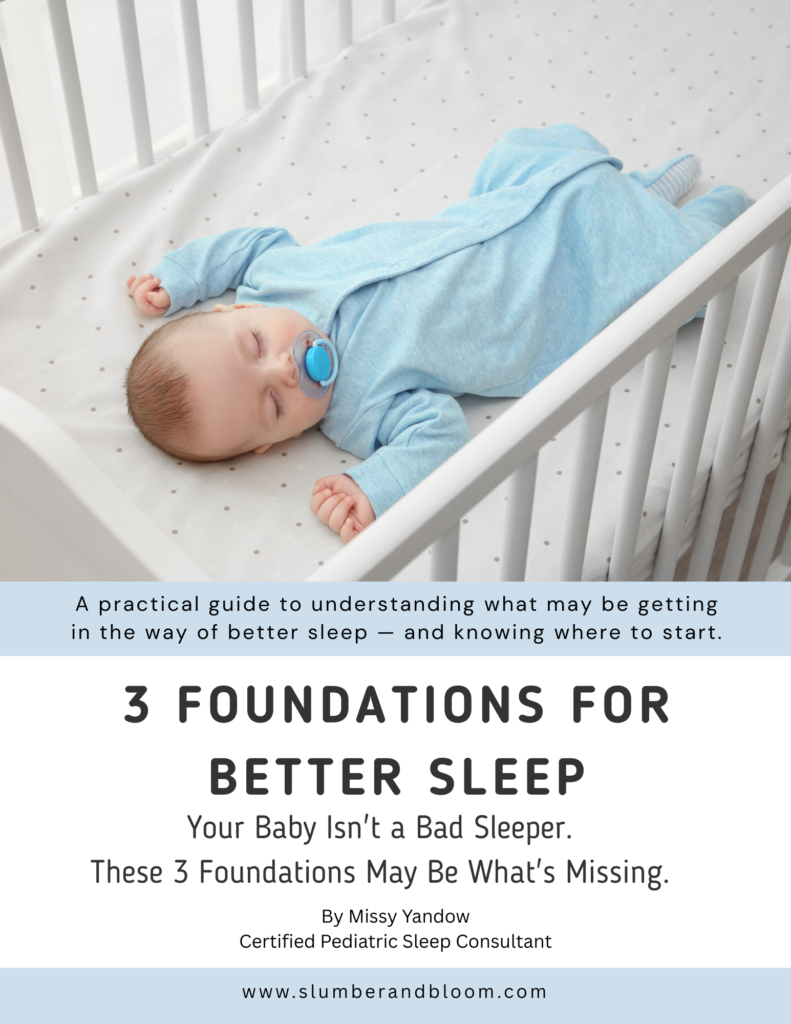
3 Foundations for Better Sleep
Improve sleep for your baby and your family with these three steps. Understanding the foundations for better sleep will help improve sleep for your baby and your whole family!
What Does “Sleeping Through the Night” Actually Mean?
This is one of the biggest misconceptions I hear.
Sleeping through the night does not mean your baby never makes a sound between bedtime and morning.
It doesn’t mean they’re unconscious for 12 straight hours.
Just like adults, babies naturally move through different sleep stages throughout the night.
They transition between:
- Light sleep
- Deep sleep
- REM sleep
During lighter sleep, they often briefly wake or partially arouse.
Babies who sleep independently simply roll over, adjust, and fall back asleep without needing a parent.
Babies who haven’t yet learned those skills often fully wake and call for help because they don’t know another way to return to sleep.
Why Independent Sleep Skills Matter
Independent sleep doesn’t mean leaving a baby to cry.
It simply means helping your child learn how to fall asleep without relying on a sleep prop every single time.
Those sleep props might include:
- Nursing to sleep
- Bottle feeding to sleep
- Rocking
- Bouncing
- Walking
- Being held
When babies know how to settle themselves, they’re much more likely to reconnect sleep cycles throughout the night.
That means fewer wakings—for everyone.
Real Life Happens (And That’s Okay)
Even babies with excellent sleep skills have difficult nights.
Sleep isn’t perfectly linear.
Your baby may temporarily wake more often because of:
- Sleep regressions
- Teething
- Illness
- Travel
- Developmental milestones
- Separation anxiety
- Changes in routine
The difference is that babies with strong independent sleep skills usually return to sleeping well once those disruptions pass.
Without those skills, temporary setbacks often become long-term sleep struggles.
When Night Wakings May Be a Medical Concern
While frequent waking can be developmentally appropriate, there are situations where it’s important to talk with your pediatrician.
Some possible red flags include:
- Constant discomfort
- Frequent arching of the back
- Persistent grunting or squirming
- Difficulty feeding
- Poor weight gain
- Growth concerns
- Pain that interferes with sleep
Your pediatrician has access to your baby’s growth charts, medical history, and feeding history.
They’re the best person to determine whether overnight feeding is still medically necessary.
As a sleep consultant, I always encourage parents to partner with their pediatrician before making major sleep changes.
Feeding and Sleep Go Hand in Hand
One question I hear often is:
“If my baby is still eating overnight, does that mean they aren’t ready to sleep through the night?”
Not necessarily.
Some babies genuinely need overnight calories.
Others continue eating overnight simply because that’s become part of their sleep routine.
The only person who can determine whether overnight feeds remain medically necessary is your child’s healthcare provider.
If growth is on track and your pediatrician clears your baby, many families choose to gradually reduce overnight feeds while teaching independent sleep skills.
Focus on Progress, Not Perfection
One of the healthiest mindsets you can have during infancy is this:
Progress over perfection.
Instead of worrying about every difficult night, look for patterns.
Ask yourself:
- Is bedtime getting easier?
- Are stretches of sleep getting longer?
- Are night wakings decreasing?
- Is my baby learning new sleep skills?
Sleep improves gradually.
There will always be occasional rough nights.
That’s completely normal.

Motherhood Affirmation Cards
Motherhood is hard and oftentimes, we’re too hard on ourselves.
When you repeat these affirmations often, and believe in them, you can start to make positive changes.
Repeat your affirmations out loud, at least three times a day.
Some good times for your affirmations might be:
- When you wake up in the morning
- When your child is taking a nap/quiet time
- Before you go to bed at night
Keep Blooming,
Missy Yandow
Why Your Bedtime Routine Matters More Than You Think
Parents sometimes tell me,
“Our bedtime routine probably doesn’t matter that much.”
It absolutely does.
A consistent bedtime routine signals to your baby’s brain that sleep is coming.
Simple routines may include:
- Bath
- Pajamas
- Feeding
- Reading books
- Singing
- Cuddles
- Into bed awake
Consistency builds predictability.
Predictability builds security.
Security supports better sleep.
Set Realistic Expectations
One of the most damaging things social media has done is convince parents that every baby should sleep 12 hours by 12 weeks.
Can it happen?
Absolutely.
Does it happen for every baby?
Not even close.
Many babies still wake overnight well beyond 12 weeks.
Development isn’t a competition.
The goal isn’t raising the earliest sleeper.
The goal is to help your child develop healthy sleep habits that support their growth while also helping your family get the rest everyone deserves.
You Don’t Have to Figure This Out Alone
If you’re overwhelmed by conflicting advice, exhausted from multiple night wakings, or unsure where to start, you don’t have to navigate it by yourself.
I’ve spent more than 25 years working in early childhood education and over 10 years helping families improve their children’s sleep.
Every sleep plan I create is customized to the individual child and family because there is no one-size-fits-all solution.
Whether your baby needs help learning independent sleep skills, you’re navigating frequent night wakings, or you’re simply looking for reassurance that you’re on the right track, I’m here to support you every step of the way.
👉 Book Your Personalized Sleep Consultation Here
Final Thoughts
The biggest takeaway from all of this data is simple:
Your baby isn’t broken.
Your parenting isn’t failing.
Many babies wake overnight, especially during the first several months of life.
But healthy babies are also capable of learning lifelong sleep skills with consistency, realistic expectations, and the right support.
Stop measuring your baby’s sleep against strangers on the internet.
Instead, focus on what’s developmentally appropriate, what your pediatrician recommends, and what works best for your family.
And remember:
Normal doesn’t always mean permanent.
If you’re ready to move from surviving nights to actually enjoying them, I’d love to help.
👉 Book Your Sleep Consultation Here
👉 Book A Free Assessment Call Here

PS: Now you know all about normal baby sleep and what red flags to look for. You learned when to ask for help and when to seek out medical advice. You’re doing a great job, and you’ll see the light at the end of the tunnel soon!


