

🌙 Why Your Toddler’s “Bad Behavior” Is Actually Overtiredness in Disguise

If your toddler is suddenly having constant meltdowns…
Or they’re bouncing off the walls every evening, and you’re thinking, “What is going on with them lately?”
You are not alone.
One of the biggest misconceptions I see as a sleep consultant is parents assuming their child’s behavior is the problem—when in reality, it’s sleep.
And I want to gently say something that might shift your entire perspective:
👉 What looks like “bad behavior” is very often overtiredness in disguise.
🎥 Watch the Full Breakdown Here
🚩 Is It Really Behavior… or Is Your Toddler Overtired?
Let’s talk about what overtiredness actually looks like—because it’s not always what you think.
Most parents expect a tired child to be slow, droopy, and ready to sleep.
But toddlers?
They do the opposite.
Signs your toddler is overtired:
- Hyperactivity (bouncing off the walls)
- Seemingly getting a “second wind”
- Big tantrums over small things
- Stubbornness and defiance
- Extra clinginess
- Emotional sensitivity
- Difficulty settling at bedtime
Sound familiar?
That “second wind” everyone talks about?
It’s not a good thing.
⚠️ The Science Behind the “Second Wind”
When your child gets overtired, their body starts producing cortisol (the stress hormone) and adrenaline.
So instead of winding down…
Their body ramps up.
They’re no longer just tired—they’re running on stress hormones.
That’s why:
- They seem wired instead of sleepy
- They fight sleep harder
- Bedtime becomes a battle
At that point, their body has actually gone past the ideal sleep window.
🤯 Overtiredness Can Mimic ADHD
This is something I always approach carefully—but it’s important.
Many young children are labeled as having ADHD when what we’re actually seeing is chronic sleep deprivation.
Now, to be very clear:
👉 Not every ADHD diagnosis is wrong.
But overtiredness can absolutely look like ADHD:
- Impulsivity
- Hyperactivity
- Trouble focusing
- Emotional dysregulation
Before assuming behavior is the issue, we always want to look at sleep first.
🕒 Why Your Toddler Might Be Overtired
There are a few very common reasons this happens:
1. Their Sleep Schedule Is Off
Even small shifts can cause big problems.
Your child might be:
- Taking short naps
- Going to bed too late
- Waking too early
And here’s something most parents don’t realize:
👉 If your child wakes early, leaving them in their crib or bed a little longer can sometimes allow them to fall back asleep and connect another sleep cycle.
That alone can add 30–60 more minutes of sleep—which is huge.
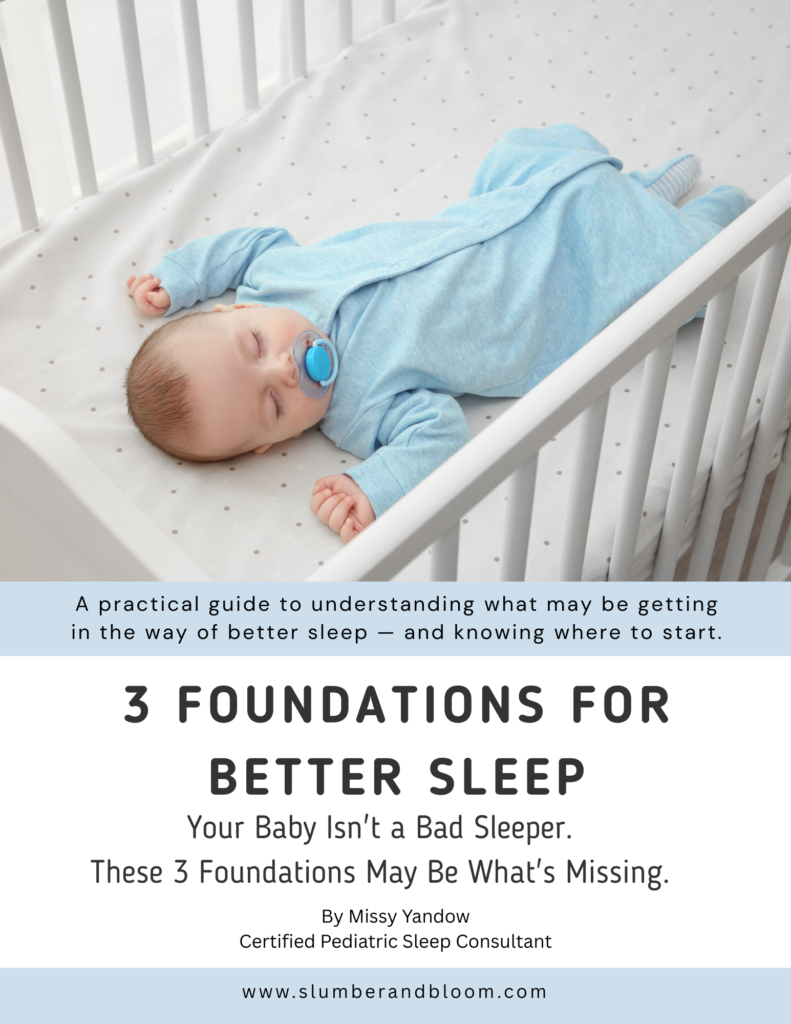
3 Foundations for Better Sleep
Improve sleep for your baby and your family with these three steps. Understanding the foundations for better sleep will help improve sleep for your baby and your whole family!
2. Nap Timing Needs Adjusting
If your toddler is:
- Fighting naps
- Falling asleep quickly but waking early
- Having inconsistent nap lengths
…it’s usually a schedule issue—not a behavior issue.
Small adjustments can make a big difference.
3. Bedtime Is Too Late
This is one of the biggest culprits.
As a general guideline:
- No/short nap → aim for 7:00 PM bedtime
- Longer nap → 7:30–8:00 PM bedtime
👉 I do not recommend going later than 8:00 PM—especially if your child is already overtired.
And I know the fear:
“But if I put them to bed earlier, won’t they wake earlier?”
Sometimes, yes—at first.
But once they catch up on sleep, their body regulates.
Earlier bedtime is often the fastest way out of overtiredness.
🔄 Big Life Transitions = Bigger Sleep Needs
This is a piece many parents miss.
When your child is going through a big transition, their body needs more sleep—not less.
Examples:
- Starting a new school
- Moving homes
- Potty training
- Welcoming a new sibling
- Changes in routine
These experiences take a lot of:
- Mental energy
- Emotional energy
- Physical energy
And that drains their system.
I see this even with older kids. The first few weeks of school?
They are exhausted.
So we adjust bedtime earlier temporarily—and it makes a huge difference.
⏰ The Most Important Strategy: Catch It Early
Once your child is in full overtired mode, it’s harder to reverse.
So your goal is to catch it before it escalates.
Watch for early sleep cues:
- Eye rubbing
- Yawning
- Zoning out
- Sudden hyper behavior
- Clinginess
Yes—hyper = tired in toddlers.
👉 When you see these signs, that’s your cue:
Move bedtime earlier.
🌆 How to Prevent Overtiredness in the Evenings
Your evening routine matters more than you think.
A lot of families unintentionally keep stimulation high right up until bedtime.
Let’s say your evening looks like this:
- Dinner
- TV while you clean up
- Bath
- Playtime
That’s all fine…
But what happens next is critical.
🌙 Create a Low-Stimulation Wind-Down Period
After dinner and activities:
👉 Turn off the TV
👉 Dim the lights
👉 Close off parts of the house
If you offer a bedtime snack, do it 30–60 minutes before bedtime.
Then shift into calm activities:
- Puzzles
- Building blocks
- Coloring
- Simple pretend play
You want:
✔ Engagement
✔ Calm environment
This helps build sleep pressure without overstimulating your child.

5 Minute sleep reboot guide
Struggling with sleepless nights and endless wake-ups? The 5-Minute Sleep Reboot Guide is your quick and effective solution to reset your child’s sleep without the overwhelm.
Inside this easy-to-follow guide, you’ll discover:
✔️ The #1 reason your child is struggling with sleep—and how to fix it fast
✔️ Simple tweaks to bedtime that make a BIG difference
✔️ A step-by-step plan to get back on track tonight
This isn’t a full sleep training program—it’s a fast, frustration-free fix when sleep goes off the rails. Whether your child’s sleep has taken a turn due to illness, travel, or bad habits creeping in, this guide will help you course-correct in just 5 minutes.
No more second-guessing. No more exhaustion. Just better sleep—fast.
📥 Get your 5-Minute Sleep Reboot Guide now for just $27!
🛁 Your Bedtime Routine Should Feel Calm (Not Chaotic)
If your child is already overtired, stimulation will make everything worse.
That means:
🚫 No dance parties
🚫 No tickle fights
🚫 No high-energy play
Because:
👉 An overtired child is already overstimulated.
A Calming Bedtime Routine Might Look Like:
- Warm bath (optional, but calming)
- Pajamas
- Lotion or gentle massage
- Reading books
- Soft lighting
Then:
👉 5–10 minutes of quiet cuddles
This is such a powerful moment.
It helps:
- Lower cortisol
- Increase melatonin
- Regulate your child’s nervous system
Just be mindful not to let your child fall asleep on you—you still want them falling asleep independently in their own space.
💛 There Are No “Bad Kids”
I want you to hear this clearly:
👉 There are no bad children.
There are children who:
- Need sleep
- Need consistency
- Need boundaries
- Need routines
And most importantly—
They need parents who understand what their behavior is really communicating.
Your child isn’t trying to give you a hard time.
They’re having a hard time.
🧠 Your Energy Matters More Than You Think
Your child feeds off your energy.
If you’re:
- Stressed
- Overstimulated
- Overwhelmed
They feel it.
And it can turn into a cycle where:
You’re dysregulated → they’re dysregulated → bedtime spirals
It’s okay to pause.
Take a breath.
Reset yourself.
Then move through the bedtime routine calmly and confidently.
📅 Consistency Is What Changes Everything
The more predictable your child’s day is, the better their body responds.
That means:
- Consistent wake times
- Age-appropriate naps
- Predictable bedtime
- A calming routine
Consistency reduces overtiredness.
And less overtiredness = fewer meltdowns, better sleep, and a more regulated child.
🌿 Ready for Better Sleep?
If you’re reading this and thinking:
“Okay… this is exactly what’s happening in my house.”
You don’t have to figure it out alone.
I’ll help you:
- Fix your child’s schedule
- Identify overtired patterns
- Create a customized sleep plan
- Get your evenings back
🎁 Start With My Free Guide
If you’re not quite ready for 1:1 support, I’ve got you.
👉 Free “3 Foundations to Better Sleep” Guide
This will walk you through the exact basics your child needs to sleep better—starting tonight.
🌸 Final Thoughts
Overtiredness doesn’t just affect sleep—it affects your child’s entire behavior, mood, and ability to cope.
But once you understand what’s really going on?
Everything starts to click.
You stop fighting behavior…
And start supporting your child’s needs.
And that’s when the transformation happens.
You deserve restful nights—and brighter days.
And you deserve to bloom right alongside your family. 💛✨


